Thursday, 9 March 2017

Aulos and Ancient Greek Metres

Images


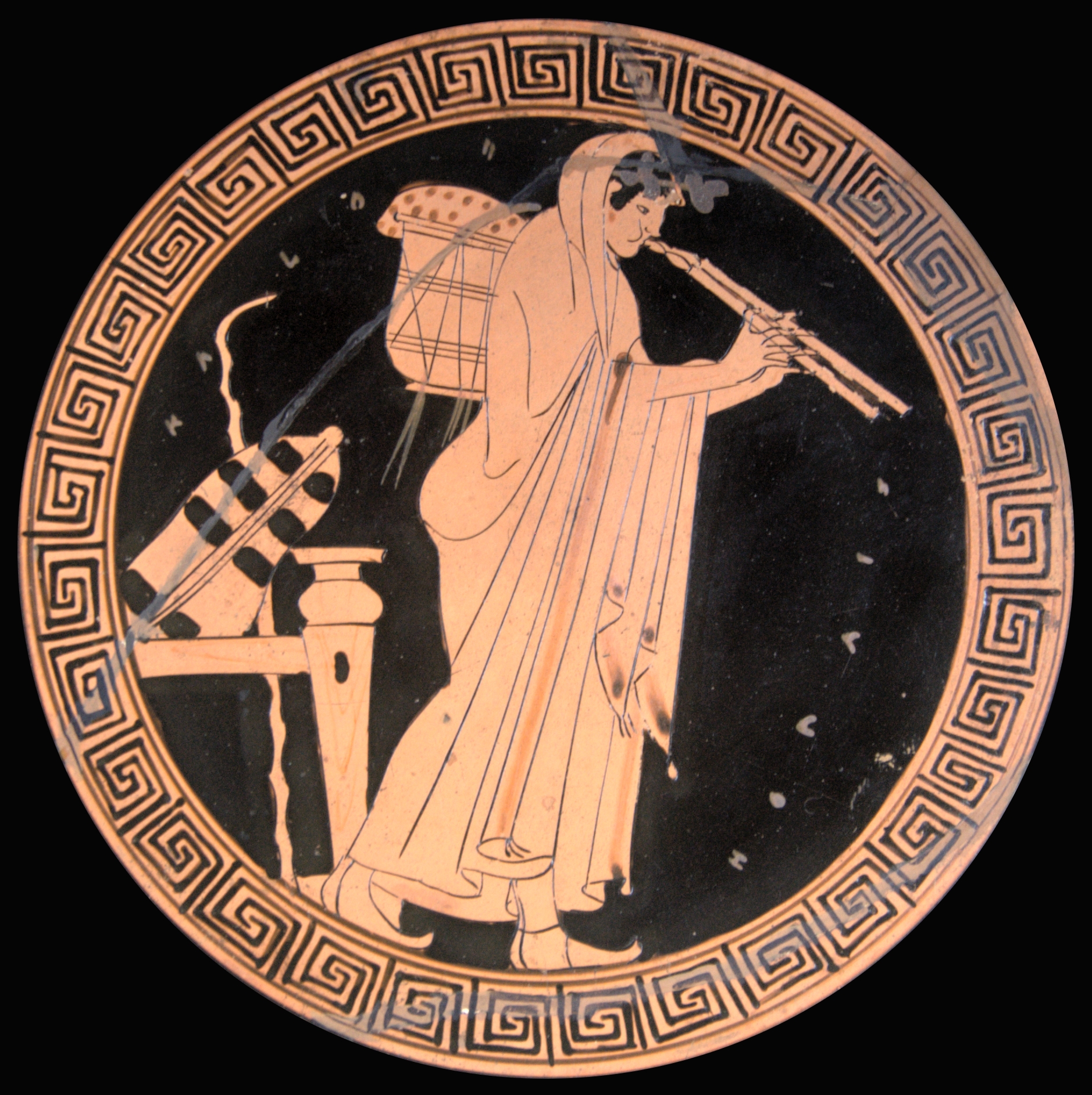
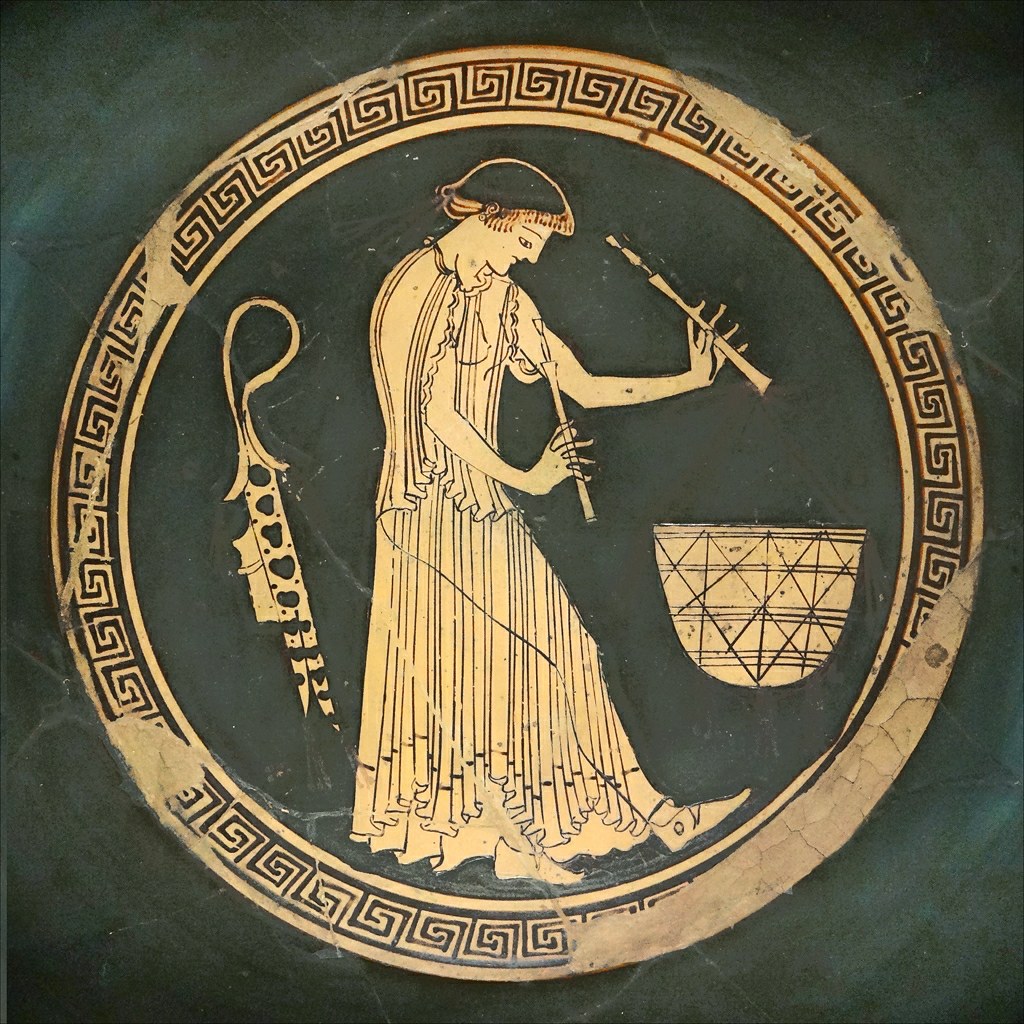
Aulos Player

Aulos Player: Altes Museum Berlin


Aulos, an oboe-like reed wind instrument, often with two pipes. It was sometimes mistakenly called and translated by the word flute in books and articles on ancient Greece which it is not. It was more akin to an oboe.

Ancient Greeks used cane (called Kalamos: Arundo Donax) to make flutes, known as kalamavlos (καλάμαυλος) ; this is a compound word, from kalamos (cane) + avlos (flute). At the time, the best cane for flutes and pan-pipes came from the banks of river Kephissos, in Attica, Greece

Ancient Greek dramatic festivals were not just theatrical spectacles but were also music and dance ones. Almost every tragedy featured a chorus comprising twelve or fifteen choreutai (members of a chorus) accompanied by an instrumentalist, principally a player on the aulos, an aulete. Between intervals of speech and dialogue performed by the actors, the chorus would sing and dance for the audience. The chorēgos (the leader of the chorus) was responsible for recruiting, training, maintaining, and costuming of  the choreutai for competitive performance at the festival. The chorēgos (the leader of the chorus) who was just the financier was not the same as the leader of the chorus during the actual dancing, who was called a coryphaeus.

The principal ancient Greek metres used in Greek drama 

  • : This is the dominant meter for the spoken dialogue in both tragedy and comedy. Each line contains three metrical "metra" (six iambic feet), following a pattern mostly of short-long syllables (∪ —), though substitutions and variations occur for expressive or practical reasons15. Its conversational, flexible rhythm mirrors natural speech, making it ideal for dramatic exchanges and plot advancement145. This meter is usually not accompanied by music3.

  • : This meter appears especially in comedy and, to a lesser extent, in tragedy. Each line consists of four trochaic metra (long-short, — ∪), typically catalectic (missing the last syllable), creating a rhythm that is march-like and energetic. Aristotle notes its early association with satyr plays3.

  • : Comprised of two short syllables followed by a long syllable (∪ ∪ —), the anapestic rhythm is used for processional songs, marches, and certain choral passages in drama. It provides a lively, moving beat well-suited to entrances, exits, and military or celebratory scenes1.

  • : Choral odes within tragedies and comedies employ a rich variety of complex lyric metres (such as dactylo-epitrite, dochmiac, and various Aeolic forms), tailored to dance and musical accompaniment. These often change rapidly within a single ode and are more elaborate than meters for spoken drama2.

Here’s a summary table:

MeterStructureMain Use in Drama
(∪ —) × 6/equivalentSpoken dialogue in tragedy/comedy
(— ∪) × 4Livelier passages, especially comedy
(∪ ∪ —)Marches, movement, processional songs
Varied (e.g. dochmiac, dactylo-epitrite)Choral odes and musical interludes

:

  •  was considered the standard metrical form for dramatic dialogue from the late 6th century BCE15.

  •  were often used when a more rhythmic or musical effect was needed13.

  •  showcased the metrical experimentation and artistry of each playwright through a diverse mix of lyric meters2.

Each meter’s rhythm, musicality, and structure contributed to the emotional and dramatic expression in ancient Greek theater1.

Aulos - Wikipedia

Sipsi - Wikipedia

Phorbeia. leather strap worn by an aulos player [aulete] to avoid excessive strain on the lips and cheeks due to continuous blowing.

Phorbeia – Wikipedia (deutsch)

https://www.ancient.eu/Aulos/

https://www.ancient.eu/Marsyas/

Phorminx - Wikipedia

Cithara - Wikipedia

Lyre - Wikipedia

Barbiton - Wikipedia

Prosody (Greek) - Wikipedia

Iambic trimeter - Wikipedia


References

The Ancient Greek Aulos: Its Construction, Performance, and Indispensable Role in Athenian Drama

The Concise Oxford Companion to Classical Literature: Howatson, M. C - Internet Archive

Internet Archive: Search for Aulos

The Context of Ancient Drama (1995): Eric Csapo and William J. Slater - Internet Archive
Chapter IVC. Music pp. 331 - 348
Sources pp. 334- 348: Speech, Song and Recitative; Old Music and New Music; The Ideology of Modes and Genera; Choral Song to Actor's Monody; 

The Greek aulos; a study of its mechanism and of its relation to the modal system of ancient Greek music. Followed by a survey of the Greek harmoniai in survival or rebirth in folk-music : Schlesinger, Kathleen - Internet Archive

Princeton encyclopedia of poetry and poetics - Internet Archive

A Companion to Ancient Greek and Roman Music - Google Books

Music in Classical Greek Drama - A Companion to Ancient Greek and Roman Music - Wiley Online Library

Music and Memory in the Ancient Greek and Roman Worlds. Cambridge: Cambridge University Press | Lauren Curtis and Naomi Weiss - Academia.edu

Greek and Roman Musical Studies - Internet Archive

Thomson, G. (1992). Greek Lyric Meter (Cambridge, 1929). Literacy and Orality in Ancient Greece.

Wysłucha, K., & Hagel, S. (2023). The Mouthpiece of the Aulos Revisited, Greek and Roman Musical Studies (published online ahead of print 2023). doi: https://doi.org/10.1163/22129758-bja10062
[Open Access]


Metrik der griechischen Dramatiker und Lyriker II : Rossbach, August, 1823-1898  - Internet Archive https://bit.ly/3aIwxTM

Metrik der griechischen Dramatiker und Lyriker III : Rossbach, August, 1823-1898  - Internet Archive https://bit.ly/3aIGGzL

Leonard Whibley (1905). A Companion to Greek Studies. Metre: CUP Archive. pp. 734–. 
A companion to Greek studies; edited for the syndics of the University Press : Whibley, Leonard - Internet Archive pp. 734-

M. L. West (1 October 1992). Ancient Greek Music. Clarendon Press. pp. 81–. ISBN 978-0-19-158685-9.
West 1992 Ancient Greek Music - Internet Archive

West 1987 Introduction To Greek Metre - Internet Archive

Introduction to Greek Meter - Google Search

Aoidoi: Articles Annis

Greek and Latin metre - Wikipedia

Mousikē and Mythos: The Role of Choral Performance in Later Euripidean Tragedy by Naomi Alison Weiss PhD. Thesis Univeristy of Berkeley

M.C. Howatson (22 August 2013). The Oxford Companion to Classical Literature. Chorus: OUP Oxford. pp. 143–. ISBN 978-0-19-954855-2.

The lyric poems of Greek tragedy : Parry, Hugh, - Internet Archive

Traces of Folk Music in Ancient Greek Drama

Aulos and Harp: Questions of Pitch and Tonality
Stefan Hagel

Hagel, Stefan. (2014). Better understanding the Louvre Aulos. Studien zur Musikarchäologie. 9. 131–142.
https://www.researchgate.net/publication/316277175_Better_understanding_the_Louvre_Aulos

Ancient Greek Music
Stefan Hagel

Stefan Hagel (17 December 2009). Ancient Greek Music: A New Technical History. Cambridge University Press. ISBN 978-1-139-47981-3.

Hagel, Stefan. “Twenty-Four in Auloi. Aristotle, Met. 1093b, the Harmony of the Spheres, and the Formation of the Perfect System.” Isbn (2005): n. pag. Print. https://bit.ly/2TKTJhb

Aristotle on the Power of Music in Tragedy

2011 A. Hughes Performing Greek Comedy


Hughes, A. (2011). Music in comedy. Performing Greek Comedy  (pp. 95-105). Cambridge: Cambridge University Press. doi:10.1017/CBO9780511920820.006

Wilson, Peter. "The aulos in Athens" Chapter 3 in .
Simon Goldhill; Robin Osborne (13 June 1999). Performance Culture and Athenian Democracy. Cambridge University Press. pp. 58–. ISBN 978-0-521-64247-7.

Chapter 4 Actor's Song in Tragedy by Edith Hall
 
The Rejection of the Aulos in Classical Greece
https://archive.org/details/musiccivilizatio0000unse/page/203/mode/1up

Diplica

The Reconstruction of Ancient Greek auloi
J. G. Landels
World Archaeology
Vol. 12, No. 3, Archaeology and Musical Instruments (Feb., 1981), pp. 298-302
Published by: Taylor & Francis, Ltd.
Stable URL: http://www.jstor.org/stable/124241

The Αὐλός or Tibia
Albert A. Howard
Harvard Studies in Classical Philology
Vol. 4 (1893), pp. 1-60
Published by: Department of the Classics, Harvard University
DOI: 10.2307/310399
Stable URL: http://www.jstor.org/stable/310399

An Early Fifth-Century Athenian Revolution in Aulos Music
Robert W. Wallace
Harvard Studies in Classical Philology
Vol. 101 (2003), pp. 73-92
Published by: Department of the Classics, Harvard University
DOI: 10.2307/3658525
Stable URL: http://www.jstor.org/stable/3658525
Ancient Greek Music Collection - Internet Archive

A Newly Discovered Aulos
J. G. Landels
The Annual of the British School at Athens
Vol. 63 (1968), pp. 231-238
Published by: British School at Athens
Stable URL: http://www.jstor.org/stable/30103192

Landels, J. (1963). The Brauron aulos. The Annual of the British School at Athens, 58 , 116-119. doi:10.1017/S0068245400013824

(PDF) Traces of Folk Music in Ancient Greek Drama | Eleonora Rocconi - Academia.edu https://bit.ly/2H2dtqb

Giulio Colesanti; Laura Lulli (7 March 2016). Case Studies. E. Rocconni: Traces of Folk Music in Ancient Greek Drama: De Gruyter. pp. 339–. ISBN 978-3-11-042863-6.

Auloi grecs du Louvre
A Bélis - Bulletin de correspondance hellénique, 1984 - persee.fr
Annie Bélis. "Aulos." Grove Music Online. Oxford Music Online. Oxford University Press,
http://www.oxfordmusiconline.com/subscriber/article/grove/music/01532.

La phorbéia
A Bélis - Bulletin de correspondance hellénique, 1986 - persee.fr
M. L. West (1992). Ancient Greek Music. Chapter 4: Wind and Percussion: Clarendon Press. pp. 81–. ISBN 978-0-19-158685-9.

III. Fragments d'auloi
A Bélis - Bulletin de correspondance hellénique. Supplément, 1984 - persee.fr
L'Aulos Phrygien
Annie Bélis
Revue Archéologique
Nouvelle Série, Fasc. 1 (1986), pp. 21-40
Published by: Presses Universitaires de France
Stable URL: http://www.jstor.org/stable/41736329

L'aulète et le jeu de l'oie
A Bélis - Bulletin de correspondance hellénique, 1992 - persee.fr
The Reconstruction of Ancient Greek auloi
J. G. Landels
World Archaeology
Vol. 12, No. 3, Archaeology and Musical Instruments (Feb., 1981), pp. 298-302
Published by: Taylor & Francis, Ltd.
Stable URL: http://www.jstor.org/stable/124241

Professional Musicians in Ancient Greece
J. A. Kemp
Greece & Rome
Vol. 13, No. 2 (Oct., 1966), pp. 213-222
Published by: Cambridge University Press on behalf of The Classical Association
Stable URL: http://www.jstor.org/stable/642604


Aristotle, "Poetics" 1447a13-16 and Musical Contests
Andrea Rotstein
Zeitschrift für Papyrologie und Epigraphik
Bd. 149 (2004), pp. 39-42
Published by: Dr. Rudolf Habelt GmbH, Bonn (Germany)
Stable URL: http://www.jstor.org/stable/20191884

Barnaby Brown
The Workshop of Dionysus
Theatre auloi | The Workshop of Dionysus

The Lost Classics - History Today by Alexander Lee Volume 68 Issue 4 April 2018
YouTube

1. The Aulos - YouTube
2. The AULOS - a progress report - YouTube

Ancient Greek music: now we finally know what it sounded like
Rediscovering Ancient Greek Music (2017) - Youtube

Alexander Lee | Published in History Today Volume 68 Issue 4 April 2018
The Lost Classics | History Today


Stefan Hagel (17 December 2009). Ancient Greek Music: A New Technical History. Cambridge University Press. ISBN 978-1-139-47981-3.
Thomas J. Mathiesen (1999). Apollo's Lyre: Greek Music and Music Theory in Antiquity and the Middle Ages. U of Nebraska Press. ISBN 0-8032-3079-6.

The Greek aulos; a study of its mechanism and of its relation to the modal system of ancient Greek music. - Schlesinger, Kathleen

Simon Goldhill; Robin Osborne (13 June 1999). Performance Culture and Athenian Democracy. 3. Aulos in Athens: Cambridge University Press. pp. 58–. ISBN 978-0-521-64247-7.

William C. Scott (26 September 2000). Musical Design in Sophoclean Theater. Dartmouth College Press. ISBN 978-1-61168-151-2

William C. Scott (26 September 2000). Musical Design in Aeschylean Theater. Dartmouth College Press. ISBN 978-1-61168-181-9.

How did ancient Greek music sound? - BBC News Archived

La musique, en particulier celle de l'aulos, dans le sacrifice en Grèce antique.
S Fleury - 2014 - papyrus.bib.umontreal.ca

Stefan Hagel https://oeaw.academia.edu/StefanHagel

Hagel, S. "Calculating auloi–the Louvre aulos scale." E. Hickmann/R. Eichmann (edd.), Studien zur Musikarchäologie 4 (2004): 373-390.

Hagel S. "Better Understanding the Louvre Aulos." Studien zur Musikarchäologie 9 (2014). Orient-Archäologie 33
http://www.academia.edu/29495586/Better_Understanding_the_Louvre_Aulos._Studien_zur_Musikarch%C3%A4ologie_9_2014_._Orient-Arch%C3%A4ologie_33

Naomi A. Weiss (2018). The Music of Tragedy: Performance and Imagination in Euripidean Theater. Chapter 1: Words, Music, and Dance in Archaic Lyric and Classical Tragedy: Univ of California Press. pp. 23–. ISBN 978-0-520-29590-2.

Rosa Andújar; Thomas R. P. Coward; Theodora A. Hadjimichael (5 February 2018). Paths of Song: The Lyric Dimension of Greek Tragedy. De Gruyter. ISBN 978-3-11-057591-0.

A. M. Dale (24 June 2010). Lyric Metres of Greek Drama. Cambridge University Press. ISBN 978-0-521-14756-9.
The lyric metres of Greek drama : Dale, A. M. (Amy Marjorie) - Internet Archive

Irina Windhaber; Peter Anreiter (26 July 2013). Proceedings of the 4th Austrian Students’ Conference of Linguistics. Vereno The BagPipe: Cambridge Scholars Publishing. pp. 232–. ISBN 978-1-4438-5088-9.

Giulio Colesanti; Laura Lulli (7 March 2016). Case Studies. E. Rocconni: Traces of Folk Music in Ancient Greek Drama: De Gruyter. pp. 339–. ISBN 978-3-11-042863-6.
(PDF) Traces of Folk Music in Ancient Greek Drama | Eleonora Rocconi - Academia.edu https://bit.ly/2H2dtqb

Review: A Distant Music
Reviewed Work: Ancient Greek Music by M. L. West
Review by: Otto Steinmayer
Arion: A Journal of Humanities and the Classics
Third Series, Vol. 4, No. 3 (Winter, 1997), pp. 223-236 (14 pages)
Published by: Trustees of Boston University
https://www.jstor.org/stable/20163648

Ancient Greek Folksong Tradition
Antonio Genova
Acta Ant. Hung. 56, 2016, 1–21
DOI: 10.55226.1/068.2016.56.1.1
http://real.mtak.hu/55226/1/068.2016.56.1.1.pdf

Ancient Greek folksong tradition - Research Portal, King's College, London https://bit.ly/2zYNr3Q


[PDF] The Submerged Musicology of Ancient Greece
A Meriani - academia.edu
Giulio Colesanti; Laura Lulli (7 March 2016). Case Studies. De Gruyter. pp. 325–. ISBN 978-3-11-042863-6.

A Companion to Ancient Greek and Roman Music - Google Books

The new music of the Trojan Women PDF
Autores: Luigi Battezzato
Localización: Lexis: Poética, retórica e comunicaciones nella tradizione classica, ISSN 2210-8823, Nº 23, 2005, págs. 73-104.PDF -The new music of the Trojan Women.


Ercoles, Marco. (2020). Music in Classical Greek Drama. 10.1002/9781119275510.ch10. 
https://books.google.me/books/publisher/content?id=st_qDwAAQBAJ&pg=PA131

Moore, Timothy. (2022). Ancient Plays: Are They Musicals?. Greek and Roman Musical Studies. 1-21. 10.1163/22129758-bja10045. 
Ancient Plays: Are They Musicals?

The Iambic Trimeter in Aeschylus and Sophocles: A Study in Metrical Form - Seth L. Schein - Google Books [Iambic Trimeter was the Rhythm of Rhetoric].

musical thought in ancient greece : edward a. lippman - Internet Archive

Ancient Greek Music Collection - Internet Archive

Exploring the “Flute Girls” of Ancient Greece through Multimodality – Classics@ Journal

The Athenian Woman: An Iconographic Handbook - Sian Lewis - Google Books


Catalogue of Metrical Forms in Ancient Greek Drama

1. Iambic Trimeter (ἰαμβικὸς τρίμετρος)

  • Structure: 6 iambic metrical feet (| ˘ – | ˘ – | ˘ – | ˘ – | ˘ – | ˘ – |), allowing substitutions (e.g. spondees, tribrachs).

  • Purpose/Function:

    • The standard meter of spoken dialogue in tragedy and comedy.

    • Mimics natural speech rhythm.

    • Used for narrative, exposition, argument, and direct conversation.

  • Genres: Tragedy, Comedy, Satyr Play

  • Examples: Widespread in Aeschylus, Sophocles, Euripides, and Aristophanes.


2. Anapaestic Meter (ἀναπαίστιον μέτρον)

  • Structure: | ˘ ˘ – | ˘ ˘ – | often in dimeter or longer.

  • Purpose/Function:

    • Used in marching or processional anapaests.

    • Common in parodos (entrance songs) or exodus (exit scenes).

    • Expresses movement, energy, or ritual transitions.

  • Genres: Tragedy, Comedy

  • Examples: Often found in Euripides' parodoi or Aristophanes’ choral entries.


3. Trochaic Tetrameter Catalectic (τροχαῖος τετράμετρος καθολικός)

  • Structure: | – ˘ | – ˘ | – ˘ | – x | (x = catalectic syllable)

  • Purpose/Function:

    • Used in lively or mocking dialogue, often for comic or satirical effect.

    • Mimics popular speech or rapid-fire banter.

  • Genres: Comedy, occasionally Tragedy (in choral songs)

  • Examples: Frequent in Aristophanes' quick-paced exchanges.


4. Dochmiac Meter (δοχμιακόν μέτρον)

  • Structure: Most common form is | – ˘ ˘ – ˘ – |

  • Purpose/Function:

    • Expresses intense emotion: grief, rage, despair.

    • Used in monodies, laments, and emotionally heightened dialogue.

  • Genres: Tragedy

  • Examples: Euripides' Heracles and Bacchae include dramatic dochmiacs in choral odes and monologues.


5. Glyconic and Aeolic Meters (Γλυκωνικὸν, Αἰολικὰ μέτρα)

  • Structure: Glyconic: | x x – ˘ ˘ – ˘ – | (x = variable syllables)

  • Purpose/Function:

    • Aeolic metres form the basis for lyrical and emotional choruses.

    • Reflect musical traditions and Aeolic dialect influence.

  • Genres: Choral odes in Tragedy and Comedy

  • Examples: Sophocles and Euripides use glyconics and related forms in choruses.


6. Euripidean Lyric Metres

  • Structure: Complex systems, often combining glyconics, choriambs, dochmiacs, etc.

  • Purpose/Function:

    • Euripides innovated with highly emotional, musically intricate lyric forms.

    • Enhanced individual expression, particularly in monodies.

  • Genres: Tragedy

  • Examples: Electra, Helen, Hippolytus.


7. Dactylic Hexameter (δακτυλικὸν ἔπος)

  • Structure: | – ˘ ˘ | – ˘ ˘ | – ˘ ˘ | – ˘ ˘ | – ˘ ˘ | – – |

  • Purpose/Function:

    • Rare in drama; mostly used in parodic or heroic invocations, especially in comedy.

    • Evokes epic tone or mock-epic style.

  • Genres: Comedy (especially parody)

  • Examples: Aristophanes, often parodying Homeric verse.


8. Cretic Meter (Κρητικὸν μέτρον)

  • Structure: | – ˘ – |

  • Purpose/Function:

    • Appears in ritualistic or religious songs.

    • Creates a solemn or incantatory rhythm.

  • Genres: Tragedy

  • Examples: Ritualistic choral sections in Aeschylus.


📚 Academic References

  1. West, M.L. (1982). Greek Metre. Oxford: Oxford University Press.

    • A foundational text on the structures and evolution of Greek metres.

  2. Dale, A.M. (1968). The Lyric Metres of Greek Drama. Cambridge University Press.

    • Detailed breakdown of lyric and choral metres, especially Euripidean innovations.

  3. Devine, A.M. & Stephens, L.D. (1994). The Prosody of Greek Speech. Oxford: Oxford University Press.

    • Discusses the relationship between spoken rhythm and metrical structure.

  4. Kamerbeek, J.C. (1960). The Plays of Sophocles: Ajax. Brill.

    • Offers metrical analysis as part of dramatic commentary.

  5. Mastronarde, D. (2002). Euripides: Medea. Cambridge Greek and Latin Classics.

    • Contains accessible commentary on metrical structures and functions.

  6. Csapo, E. & Slater, W.J. (1994). The Context of Ancient Drama. University of Michigan Press.

    • Includes discussion of performance contexts influencing metre choice.

  7. Arnott, P.G. (1962). Greek Scenic Conventions in the Fifth Century B.C. Oxford: Clarendon Press.

    • Discusses metres in the context of staging and performance.

  8. Taplin, O. (1978). Greek Tragedy in Action. London: Methuen.

    • Places metrical use in the broader context of dramatic action.

Saturday, 21 November 2015

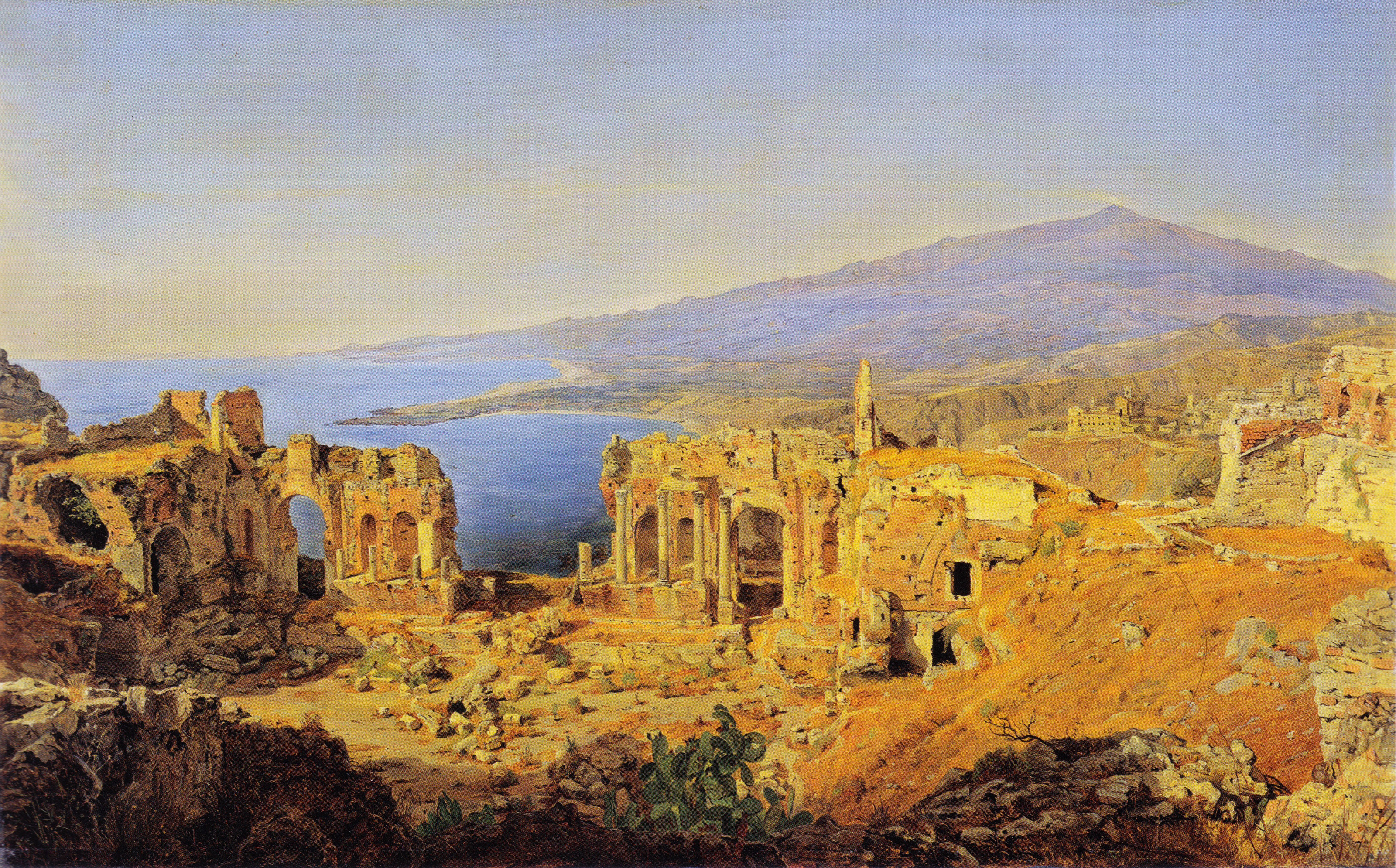
Ancient Theatre of Taormina, Italy


References

Teatro antico di Taormina - Wikipedia

Teatro Antico di Taormina - Google Maps

Aditus | Ancient Theatre of Taormina | Tickets and Information

Via del Teatro Greco, 1, 98039 Taormina ME, Italy 
37.852333,15.292139

Theatre of Taormina - Wikimapia

Ancient Theatre of Taormina - Wikipedia

Taormina - Theatrum

Art and History: Sicily. Taormina Theatre: Casa Editrice Bonechi. 2003. pp. 68–. ISBN 978-88-476-0756-9.

Kathryn Bosher (2012). Theater Outside Athens: Drama in Greek Sicily and South Italy. Tauromenium: Cambridge University Press. pp. 206–. ISBN 978-1-139-51033-2.

Geoffrey Dennis (1864). A Handbook for Travellers in Sicily: Including Palermo, Messina, Catania, Syracuse, Etna, and the Ruins of the Greek Temples. Theatre of Taormina: J. Murray. pp. 456–.


George Newenham Wright (1840). The shores and islands of the Mediterranean, drawn by sir G. Temple, bart. [and others]. With an analysis of the Mediterranean and descriptions of the plates by G.N. Wright. Theatre of Taormina. pp. 98–.

Taormina, the charming city that enchanted Goethe

Italian Journey: Goethe, Johann Wolfgang von, - Internet Archive pp 236-7

Photos

https://photos.app.goo.gl/Y9dhR5B9sey4djZw6

Images

Mount Etna from the Greek Theatre, Taormina, Sicily, 1890 by John MacWhirter - Art Gallery of NSW Australia

ERY_BAGG_1997_87-001.jpg (800×594)

Ruins At Taormina Sicily From English Illustrated Magazine 1886 Stock Illustration - iStock


Monday, 9 November 2015

Masks and Costume

A mask enabled an actor to hide his own identity and take on that of another, namely the character he was playing, by giving him a new face. But the putting on a mask or donning a face was not really a negative act of concealment but more really a positive act of becoming. Masks worn by the chorus also gave the members of the chorus a group identity, especially if their masks were similar or all the same. In the large Ancient Greek theatres most of the audience could not see the expressions on the real faces of the actors or chorus. Masks enlarged the images of a facial expression allowing the audience to see grief, joy, and/or any other feeling or emotion the poet or playwright was trying to express. Masks identified and distinguished the good characters from the bad, the tragic characters from the comic ones. Ancient Greek theatre used a standard sets of masks with conventional expressions on them, such that the moment the audience saw a character on stage wearing one those masks, they knew exactly what standard character that actor was trying to portray.

The mask was an organic element in this new form called theatre because the mask is the medium per excellence for the embodiment of the Other and participates in the creation of the stage as a site of the dialogue between the Self and the Other.
Dionysus wore a mask and was personified by means of it. His effigy was a mask nailed to a wooden pole.

A mask was at the centre or heart of imitation, the very core of Ancient Greek theatre.

Andrew Stott (2014). Comedy. Aristotle's Definition of Comedy: Routledge. pp. 19–. ISBN 978-1-134-45397-9.A comic mask is ugly, but does not indicate pain.

[Ugliness, in the Greek mind, was equivalent to badness.]

Some have argued that the shape of the mask amplified the actor's voice, like a megaphone, making it easier for the audience to hear the words and lines he was speaking..  Others, after testing this theory, have argued that this did not hold up but rather that it was the tone of the voice of the actor which the mask changed rather than its loudness. A mask forced the actor to become clearer in his diction.

In ancient Greek theatre, the masks worn by actors were not strictly about signalling a "goodie" or a "baddie" in the simplistic sense of modern hero-villain dynamics. Instead, the masks conveyed key aspects of the character's identity, emotional state, and role in the story. Here's how they functioned:

  1. Character Identity: Masks helped the audience identify the character’s age, gender, social status, and role in the narrative. Since all actors were male, masks enabled them to portray female characters or distinguish between gods, heroes, and mortals.

  2. Emotional Expression: Masks were designed to amplify expressions and emotions, making them visible to the large audience even in the back rows. For example, exaggerated features like a frown or smile could instantly convey whether the character was joyful, sorrowful, angry, or mischievous.

  3. Moral Alignment or Archetypes: While some masks could imply certain traits that might align with "good" or "bad" qualities (e.g., a mask with sharp, cruel features might suggest a villain or antagonist, while a noble, serene mask might suggest a virtuous hero), this wasn't a rigid rule. Ancient Greek drama often explored moral ambiguity and the complexity of human nature, especially in tragedies.

  4. Recognizable Stock Characters: In comedies, masks often represented stock characters with exaggerated features for humorous effect, such as the foolish old man or the boastful soldier, which could imply their moral or behavioral traits.

While masks could suggest a character’s nature or role in the story, the moral dynamics in Greek plays were usually more nuanced and were revealed through dialogue, actions, and the unfolding narrative, rather than being purely signaled by the masks.


Extract from
Arthur Elam Haigh; Sir Arthur Wallace Pickard-Cambridge (1968). The Attic Theatre: A Description of the Stage and Theatre of the Athenians, and of the Dramatic Performances at Athens. Ardent Media. pp. 244–.
Archive.Org (1907): The Attic theatre a description of the stage and theatre of the Athenians.

...
Masks were generally made of linen. Cork and wood were occasionally used. The mask covered the whole of the head, both in front and behind. The white of the eye was painted on the mask, but the place for the pupil was left hollow, to enable the actor to see. The expression of the tragic mask was gloomy and often fierce; the mouth was opened wide, to give a clear outlet to the actor's voice. One of the most characteristic features of the tragic mask was the onkos. This was a coneshaped prolongation of the upper part of the mask above the forehead, intended to give size and impressiveness to the face. The onkos was not used in every case, but only where dignity was to be imparted. It varied in size according to the character of the personage. The onkos of the tyrant was especially large; that of women was less than that of men. A character was not necessarily represented by the same mask throughout the piece. The effects of misfortune or of accident had often to be depicted by a fresh mask. For instance, in the Helen of Euripides Helen returns upon the stage with her hair shorn off, and her cheeks pale with weeping, Oedipus, at the end of the Oedipus Tyrannus of Sophocles, is seen with blinded eyes and a bloodstained face. In such cases a change of mask must have been necessary.
...

Colour

The statues in an Ancient Greek Temple or Shrine, or on the Friezes were all part of the theatricals and rituals that took place in those temples and shrines. Those statues were not bare white marble but were highly coloured. It is my supposition that the costumes and masks of Ancient Greek Theatre were polychrome and highly coloured just like the statues in the temples and shrines were, and were probably coloured using similar colours to the temples and their statues.

Colour in Ancient Greece < Journal | Sophia> https://bit.ly/3LhIlA6
Liebieghaus Gods in Color  https://bit.ly/3dkcPEY
Greek lion statue from Loutraki - WIONEWS
colours of ancient greek statues - Google Search Metropolitan Museum, New York
Coloured Masks Ancient Greek Theatre - Google Search

Sinclair, A. (2013). Unmasking Ancient Colour: Colour and the Classical Theatre MaskAncient Planet Online Journal4, 42-61. 

'Body and Mask' in Performances of Classical Drama on the Modern Stage

A Varakis - A Companion to Classical Receptions, 2008 - books.google.com

Performing Ancient Drama in Maskthe Case of Greek Tragedy

C Vervain - New Theatre Quarterly, 2012 - cambridge.org

Greek drama and dramatists

AH Sommerstein - 2003 - taylorfrancis.com

Marshall, C. W. (1999). Some Fifth-Century Masking Conventions. Greece & Rome46(2), 188–202. http://www.jstor.org/stable/643197.

On Seeing and Depicting the Theatre in Classical Athens by ]. R. Green
PDF - 5631 - Greek, Roman and Byzantine Studies, 1991.

A Dictionary of Greek and Roman Antiquities (1890), PERSO´NA

The Ancient Theatre by Simon, Erika - Internet Archive

Stage Costume Design: theory, technique, and style by Douglas Russell - Internet Archive

Theatre Props and Civic Identity in Athens, 458-405 BC - Google Books

References

The Comic Body in Ancient Greek Theatre and Art, 440-320 BCE - Google Books

Chiton - Britannica

Clothing in ancient Greece - Wikipedia
Ancient Greek Clothing - NovaRoma
Chiton (costume) - Wikipedia
Himation - Wikipedia

Stagecraft: Costume Design - Britannica

Rosie Wyles (1 October 2020). Theatre Props and Civic Identity in Athens, 458-405 BC. Bloomsbury Academic. ISBN 978-1-350-14397-5.

Buskin -Wikipedia

Kothornos - History of Sandals Ian C. Storey; Arlene Allan (15 April 2008). A Guide to Ancient Greek Drama. Kothornos: John Wiley & Sons. pp. 79–. ISBN 978-1-4051-3763-8.

A Short History Of High Heels, From Ancient Greece To Carrie Bradshaw

Sue Blundell (2002). Women's Dress in the Ancient Greek World. Duckworth. ISBN 978-0-7156-3136-2.

Nudity as a Costume in Classical Art
Author(s): Larissa BonfanteSource:
American Journal of Archaeology,Vol. 93, No. 4 (Oct., 1989), pp. 543-570
Published by Archaeological Institute of America

Liza Cleland; Mary Harlow; Lloyd Llewellyn-Jones (2005). The Clothed Body in the Ancient World. Oxbow. ISBN 978-1-84217-165-3.

Monuments illustrating old and middle comedy by T.B.Webster.
πρόσωπον face
προσωπείον  [prosopeion] mask (latin persona)
προσωποποιία  dramatization, the putting of speeches into the mouths of characters

Greek Theatre Production: T.B.L Webster - Internet Archive.

VARAKIS, A. (2010). BODY AND MASK IN ARISTOPHANIC PERFORMANCE. Bulletin of the Institute of Classical Studies, 53(1), 17–38. http://www.jstor.org/stable/43655620

Vovolis, T., & Zamboulakis, G. (2007). The acoustical mask of Greek tragedy. Didaskalia, 7(1)
Chapitre X - Les Masques pp 140-168

Dionysos, étude sur l'organisation matérielle du théâtre athénien: Octave Navarre - Internet Archive
Chapitre XI - Le Costume pp 169-188

MEINECK, P. (2011). The Neuroscience of the Tragic Mask. Arion: A Journal of Humanities and the Classics, 19(1), 113–158. http://www.jstor.org/stable/41308596

The sound effect of ancient Greek theatrical masks
Kontomichos, Fotios; Papadakos, Charalampos; Georganti, Eleftheria; Vovolis, Thanos; Mourjopoulos, John N.
Volume 2014, (2014)
Permalink: http://hdl.handle.net/2027/spo.bbp2372.2014.220

David Wiles (9 August 2007). Mask and Performance in Greek Tragedy: From Ancient Festival to Modern Experimentation. Cambridge University Press. ISBN 978-0-521-86522-7.

David Wiles (3 June 2004). The Masks of Menander: Sign and Meaning in Greek and Roman Performance. Cambridge University Press. ISBN 978-0-521-54352-1.

Masks and the Origin of the Greek Drama
F. B. Jevons
Folklore
Vol. 27, No. 2 (Jun. 30, 1916), pp. 171-192
Published by: Taylor & Francis, Ltd. on behalf of Folklore Enterprises, Ltd.

https://archive.org/stream/folklore27folkuoft#page/171/mode/1up

Masks and Acting : Jevons, F. B. - Internet Archive

Gwendolyn Compton-Engle (27 April 2015). Costume in the Comedies of Aristophanes. Cambridge University Press. ISBN 978-1-107-08379-0.

Compton-Engle, G. (2003). Control of Costume in Three Plays of Aristophanes. The American Journal of Philology124(4), 507–535. http://www.jstor.org/stable/1561789

Martin Revermann (12 June 2014). The Cambridge Companion to Greek Comedy. Cambridge University Press. ISBN 978-0-521-76028-7.

Costume in Greek Drama - Iris Brooke

Iris Brooke (2012). Costume in Greek Classic Drama. Courier Corporation. ISBN 978-0-486-14782-6.

Costume in Greek Classic Drama: Iris Brooke - Internet Archive

Rosie Wyles (27 October 2011). Costume in Greek Tragedy. Bloomsbury Academic. ISBN 978-0-7156-3945-0.

Theatrical Costume, Masks, Make-up and Wigs: A Bibliography and Iconography - Sidney Jackson Jowers, John P. Cavanagh - Google Books
 

(PDF) Rosie Wyles: The Stage Life of Costume in Euripides’ Telephus, Heracles, and Andromeda; an Aspect of Performance Reception within Graeco-Roman - Academia.edu https://bit.ly/2SPEuDc

Compton-Engle, G. (2003). Control of Costume in Three Plays of Aristophanes. The American Journal of Philology, 124(4), 507–535. http://www.jstor.org/stable/1561789


The Neuroscience of the Tragic Mask
Peter Meineck
Arion: A Journal of Humanities and the Classics
Third Series, Vol. 19, No. 1 (SPRING/SUMMER 2011), pp. 113-158
Published by: Trustees of Boston University; Trustees of Boston University through its publication Arion: A Journal of Humanities and the Classics
Stable URL: http://www.jstor.org/stable/41308596

Facing Otherness: The Tragic Mask in Ancient Greece
Claude Calame
History of Religions
Vol. 26, No. 2 (Nov 1986), pp. 125-142
Published by: University of Chicago Press
Stable URL: http://www.jstor.org/stable/1062229

Dorian Dress in Greek Tragedy
LUIGI BATTEZZATO
Illinois Classical Studies
Vol. 24/25, Euripides and Tragic Theatre in the Late Fifth Century (1999-2000), pp. 343-362
Published by: University of Illinois Press
Stable URL: http://www.jstor.org/stable/23065376

Control of Costume in Three Plays of Aristophanes
Gwendolyn Compton-Engle
The American Journal of Philology
Vol. 124, No. 4 (Winter, 2003), pp. 507-535
Published by: The Johns Hopkins University Press
https://www.jstor.org/stable/1561789

Beare, W. (1954). The Costume of the Actors in Aristophanic Comedy. The Classical Quarterly4(1/2), 64–75. http://www.jstor.org/stable/636645

HUGHES, A. (2006). THE COSTUMES OF OLD AND MIDDLE COMEDY. Bulletin of the Institute of Classical Studies, 49, 39–68. http://www.jstor.org/stable/43646676


Mary Louise Hart; J. Michael Walton; J. Paul Getty Museum (2010). The Art of Ancient Greek Theater. Getty Publications. ISBN 978-1-60606-037-7.

A Dictionary of Greek and Roman Antiquities (1890) - PERSONA Perseus Digital Library

John Jones (1980). On Aristotle and Greek Tragedy. Stanford University Press. pp. 43–. ISBN 978-0-8047-1093-0.

Pallas: revue d'études antiques. Dionysos avec ou sans masque: Presses Univ. du Mirail. pp. 105–. ISSN 00310387.

Rosie Wyles (27 October 2011). Costume in Greek Tragedy. Bloomsbury Academic. ISBN 978-0-7156-3945-0.

Melinda Powers (May 2014). Athenian Tragedy in Performance: A Guide to Contemporary Studies and Historical Debates. 5. Costuming and Properties: University of Iowa Press. pp. 79–. ISBN 978-1-60938-231-5.

John E. Thorburn (2005). The Facts on File Companion to Classical Drama. Masks: Infobase Publishing. pp. 326–. ISBN 978-0-8160-7498-3.

Toby Wilsher (2006). The Mask Handbook: A Practical Guide. Chapter 2: Where do our masks come from?: Routledge. pp. 11–. ISBN 978-1-134-12240-0.

Claude Calame; Peter Michael Burk (2005). Masks of Authority: Fiction and Pragmatics in Ancient Greek Poetics. Cornell University Press. pp. 3–. ISBN 0-8014-3892-6.

David Wiles (2007). Mask and Performance in Greek Tragedy: From Ancient Festival to Modern Experimentation. Cambridge University Press. ISBN 978-0-521-86522-7.

David Wiles (2004). The Masks of Menander: Sign and Meaning in Greek and Roman Performance. Cambridge University Press. ISBN 978-0-521-54352-1.

Meineck, Peter (2011) Opsis: the visuality of Greek drama. PhD thesis, University of Nottingham.

Alan Hughes (2012). Performing Greek Comedy. The Masks of Comedy: Cambridge University Press. pp. 166–. ISBN 978-1-107-00930-1.

Gwendolyn Compton-Engle (27 April 2015). Costume in the Comedies of Aristophanes. Cambridge University Press. pp. 1–. ISBN 978-1-107-08379-0.

Aristotle Poetics 1449a 

Pollux on Special Masks - Persée

Sutton, D. F. (1984). POLLUX ON SPECIAL MASKS. L’Antiquité Classique, 53, 174–183. http://www.jstor.org/stable/41657421

Judith Chaffee; Oliver Crick (2014). The Routledge Companion to Commedia dell'Arte. Taylor & Francis. pp. 222–. ISBN 978-1-317-61336-7.

Richard Janko (1984). Aristotle on Comedy: Towards a Reconstruction of Poetics II. Debasing the Characters: University of California Press. pp. 197–. ISBN 978-0-520-05303-8.

by Angie Varakis
Royal Holloway College, Egham, Surrey
Didaskalia - The Journal for Ancient Performance

Can You Hear Me Now? - Implications of New Research in Greek Theatrical Masks
by Amy R. Cohen
Randolph College, Lynchburg, Virginia
Didaskalia - The Journal for Ancient Performance
https://bit.ly/3hPAXLV

The Use of Masks in the Modern Staging of Aristophanes in Greece
by Angeliki Varakis 
Royal Holloway College, Egham, Surrey
 
http://artsedge.kennedy-center.org/interactives/greece/theater/playersProps.html


Graham Ley (2006). A Short Introduction to the Ancient Greek Theater: Revised Edition. University of Chicago Press. pp. 25–. ISBN 978-0-226-47761-9.

David Wiles (9 August 2007). Mask and Performance in Greek Tragedy: From Ancient Festival to Modern Experimentation. Cambridge University Press. ISBN 978-0-521-86522-7.

Mary Louise Hart; J. Michael Walton; J. Paul Getty Museum (2010). The Art of Ancient Greek Theater. Getty Publications. pp. 33–. ISBN 978-1-60606-037-7.
Mary Louise Hart; J. Michael Walton; J. Paul Getty Museum (2010). The Art of Ancient Greek Theater. Getty Publications. pp. 42–. ISBN 978-1-60606-037-7.


The Masks of Greek Tragedy as Point of Departure for Modern Performance
Chris Vervain and David Wiles
New Theatre Quarterly / Volume 17 / Issue 03 / August 2001, pp 254-272
Cambridge University Press 2001

Vervain, C. (2004). Performing ancient drama in mask: The case of Greek new comedy. New Theatre Quarterly, 20(03), 245-264.

Can You Hear Me Now?-Implications of New Research in Greek Theatrical Masks
Cohen, A. R. (2007). 
Didaskalia, 7(1).

Cooper, C. (1971). The Greek mask; its origin and function (Doctoral dissertation, California State University, Northridge).

Phan, S., Valenzuela, A., Simmala, A., Ma, T., & English, I. B. Conventions of the Theatre.

Marshall, C. W. (1999). Some fifth-century masking conventions. Greece and Rome (Second Series), 46(02), 188-202.
http://dx.doi.org/10.1093/gr/46.2.188

Tilo Schabert (2002). Die Sprache der Masken. Königshausen & Neumann. pp. 17–. ISBN 978-3-8260-2250-0.


Vase: kalyx krater
Side A:  Scene from Aristophanes' Birds.
Collection of  The J. Paul Getty Museum, Malibu, California
Beazley Number 13689
Malibu 82.AE.83
http://www.perseus.tufts.edu/hopper/image?img=Perseus:image:1990.05.0187

Unmasking Ancient Colour: Colour and the Classical Theatre Mask
By Andrea Sinclair

John E. Thorburn (2005). The Facts on File Companion to Classical Drama. Masks Infobase Publishing. pp. 326–. ISBN 978-0-8160-7498-3.


John Frow (2014). Character and Person. OUP Oxford. pp. 247–. ISBN 978-0-19-100969-3.


Escholar Manchester Link  PDF Link

Tsilfidis, A., Vovolis, T., Georganti, E., Teubner, P., & Mourjopoulos, J. (2011). Acoustic radiation properties of ancient Greek theatre masks.
In Proc. of the Acoustics of Ancient Theatres Conference, Patras, Greece. Pdf Link

The Complete Aristotle. A comic mask is ugly: Booklassic. pp. 2993–. ISBN 978-963-525-370-8.

Sutton, D. F. (1984). POLLUX ON SPECIAL MASKS. L’Antiquité Classique, 53, 174–183. http://www.jstor.org/stable/41657421

Aristotle (2013). Poetics. OUP Oxford. pp. 20–. ISBN 978-0-19-163580-9.  

Didaskalia - The Journal for Ancient Performance
Research on the Ancient Mask by Angie Varakis

Greek Color Theory and the Four Elements

Corporality in the Ancient Greek Theatre
R. Drew Griffith
Phoenix
Vol. 52, No. 3/4 (Autumn - Winter, 1998), pp. 230-256
Published by: Classical Association of Canada
DOI: 10.2307/1088669
https://www.jstor.org/stable/1088669

Paul Zanker; (1)995). The Mask of Socrates: The Image of the Intellectual in Antiquity. University of California Press. ISBN 978-0-520-20105-7.

Alan Hughes (2012). Performing Greek Comedy. Cambridge University Press. ISBN 978-1-107-00930-1.

Ancient masks Tsilfidis et alii
The Acoustics of Ancient Theatres Conference
Patras, September 18
-21, 2011

Acoustical Masks and Sound Aspects of Ancient Greek Theatre – DOAJ
https://revista.classica.org.br/classica/article/view/82

Thanos Vovolis, & Torbjorn Alström. (2005). [RE: “The Voice in the Mask”]. TDR (1988-), 49(1), 12–14. http://www.jstor.org/stable/4488611

Body, Dress, and Identity in Ancient Greece - Mireille M. Lee - Google Books

Masks and Costumes used in the 5th Century BC Athenian Drama Festivals

=================

Some of types of Costumes used by actors in Ancient Greek drama Costumes in ancient Greek drama were essential to theatrical performance, helping convey character, status, gender, and emotion. Here's an overview of what was typically used:

---

1. Chiton (Χιτών)

* A long, flowing tunic made of linen or wool.
* Worn by both male and female characters.
* Could be plain or elaborately decorated depending on the role.

2. Himation (Ἱμάτιον)

* A cloak or outer garment worn over the chiton.
* Often draped over one shoulder or wrapped around the body.
* Added a sense of dignity or gravitas, especially for gods, kings, or elders.

3. Chlamys (Χλαμύς)

* A shorter cloak often worn by messengers or travellers.
* Made of wool and pinned at the shoulder.

---

4. Masks (Prosopon – πρόσωπον)

* Essential for Greek theatre, made of linen, cork, or wood.
* Represented different characters, emotions, and roles.
* Amplified the voice through a built-in megaphone-like mouth opening.
* Helped distinguish characters in large open-air theatres.
* Often exaggerated expressions for visibility.

---

5. **Kothornoi (Κοθόρνοι)

* High, platform boots worn by actors, especially in tragedies.
* Gave actors additional height and an imposing presence.

---

6. **Onkos (Ὄγκος)

* A tall headdress or mask extension used in tragedy.
* Made characters appear larger and more impressive.

---

7. Phallus (used in comedy)

* In Old Comedy (like Aristophanes), a leather phallus was worn by male actors.
* Often exaggerated and comically used to represent virility or mockery.

---

8. Gender and Role Indicators

* All actors were male, so costumes and masks were essential to portray women.
* Female characters wore longer chitons and more elaborate veils or headdresses.
* Masks and costume color could indicate age, gender, and social status.

---